Executive Summary
Role: UI/UX Designer
Platform: Electronic Municipal Market Access (EMMA)
Cross-Functional Partners: Business Strategy, Engineering, Product Leadership
Core Problem: Redesigning an underutilized (0.76% traffic share) enterprise search tool to allow users to search relational financial attributes alongside unstructured disclosure document text.
Key Strategy: Shifted from forcing an impossible backend tech integration (Amazon Kendra + Metadata DB) to designing a unified Dual-Mode Search Experience with consistent interaction models.
Status: Version 3 built; scheduled for 2026 Beta release.
The Challenge: A Misunderstood Search Model
The Electronic Municipal Market Access (EMMA) Advanced Search helps institutional users locate municipal securities across complex financial attributes. The legacy experience was underutilized, accounting for only 0.76% of total site traffic.
Usability Friction Points Identified:
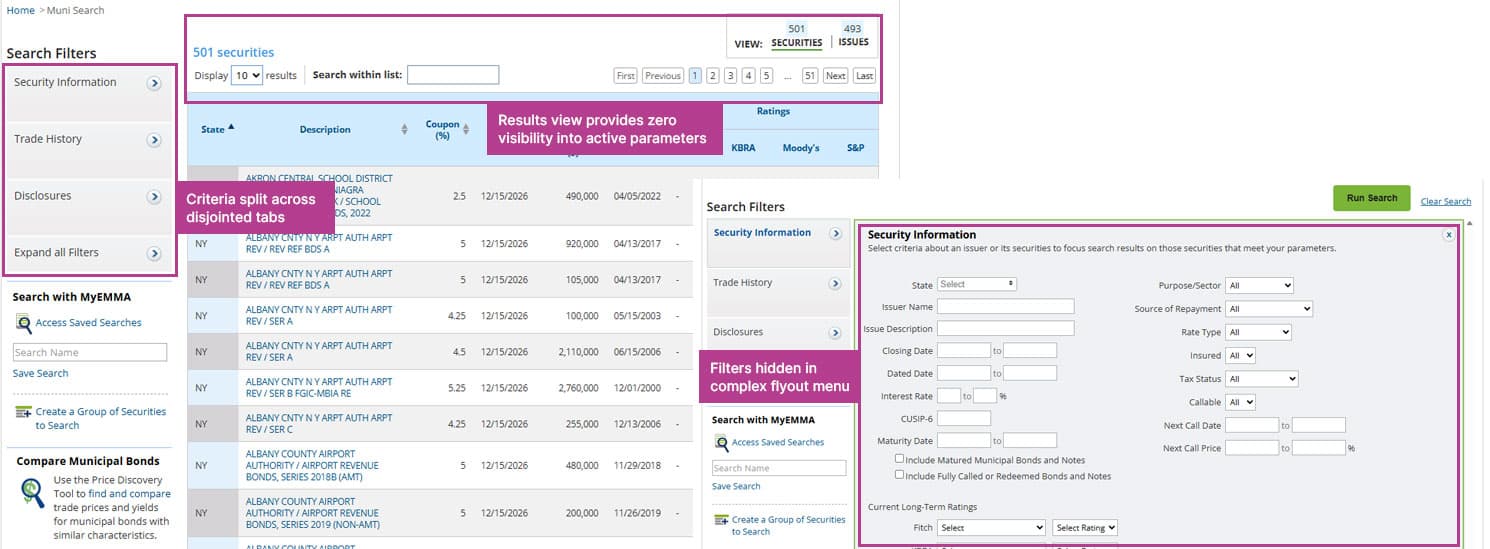
- Hidden Controls: Search filters buried inside a flyout menu.
- Fragmented Context: Filters split across multiple tabs, forcing users to build queries blindly.
- Invisible Parameters: Search result screens hid applied criteria, forcing users to reopen menus to recall search inputs.
The Initial Premise: The business originally requested a simple UI cleanup and the removal of disclosure document filters (which were slated to move to a standalone search tool).
Iteration 1: Solving Usability (And Uncovering the Real Problem)
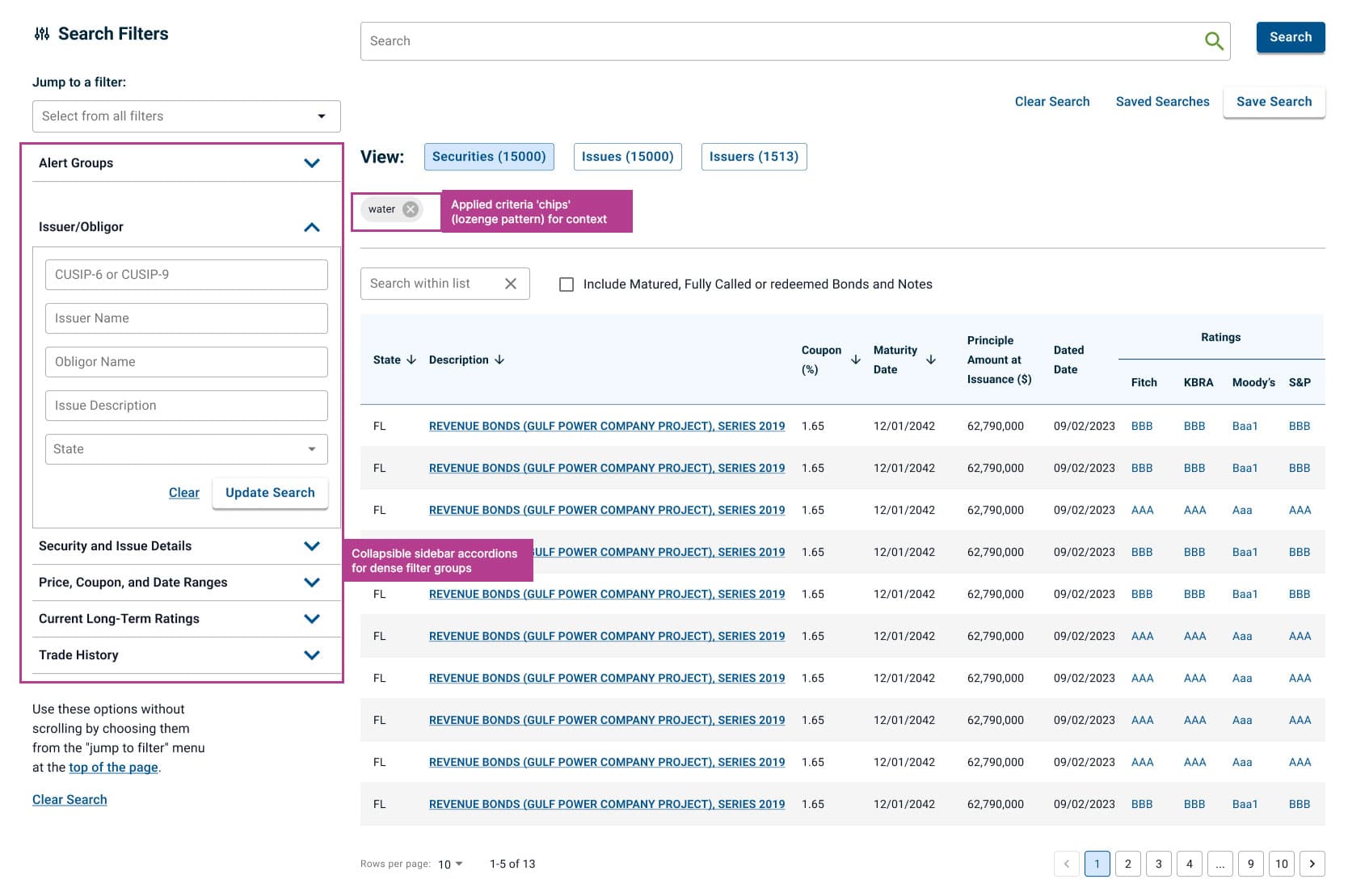
I redesigned the interface to eliminate friction:
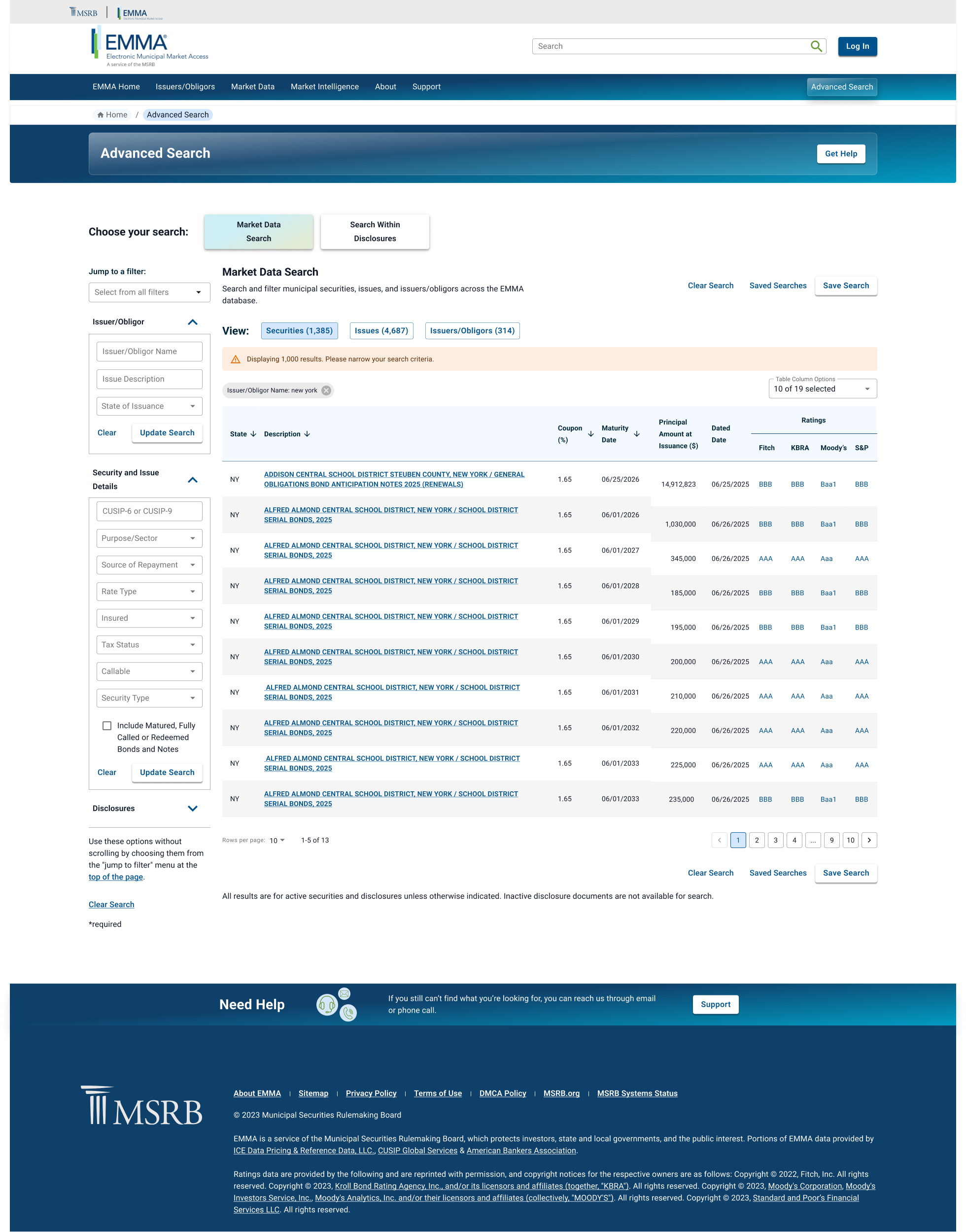
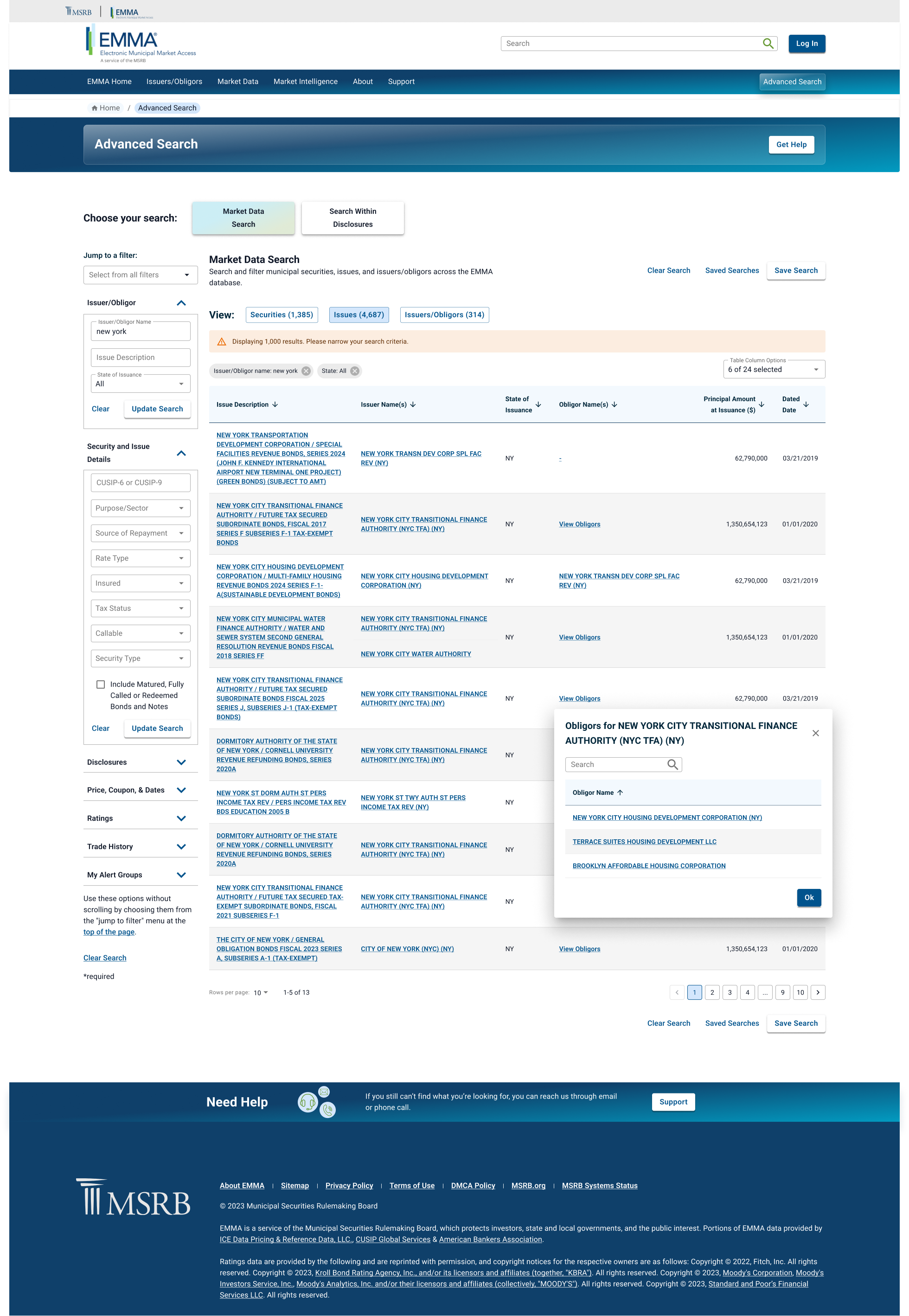
- Replaced flyouts with a persistent left-hand filter sidebar featuring collapsible accordions.
- Introduced applied criteria chips above result tables for immediate visibility into query parameters.
The Beta Finding
Strategic Shift: The problem evolved from “How do we make Advanced Search easier to use?” to “How do we unify search across relational objects and unstructured document data?”
During beta testing, users revealed that disclosure document lookup was not an isolated task. Users searched for document text in context with relational attributes (e.g., "Find all financial filings for issues within the Health sector"). The standalone document search failed this primary workflow.
Iteration 2: Exploring the Unified Object Model
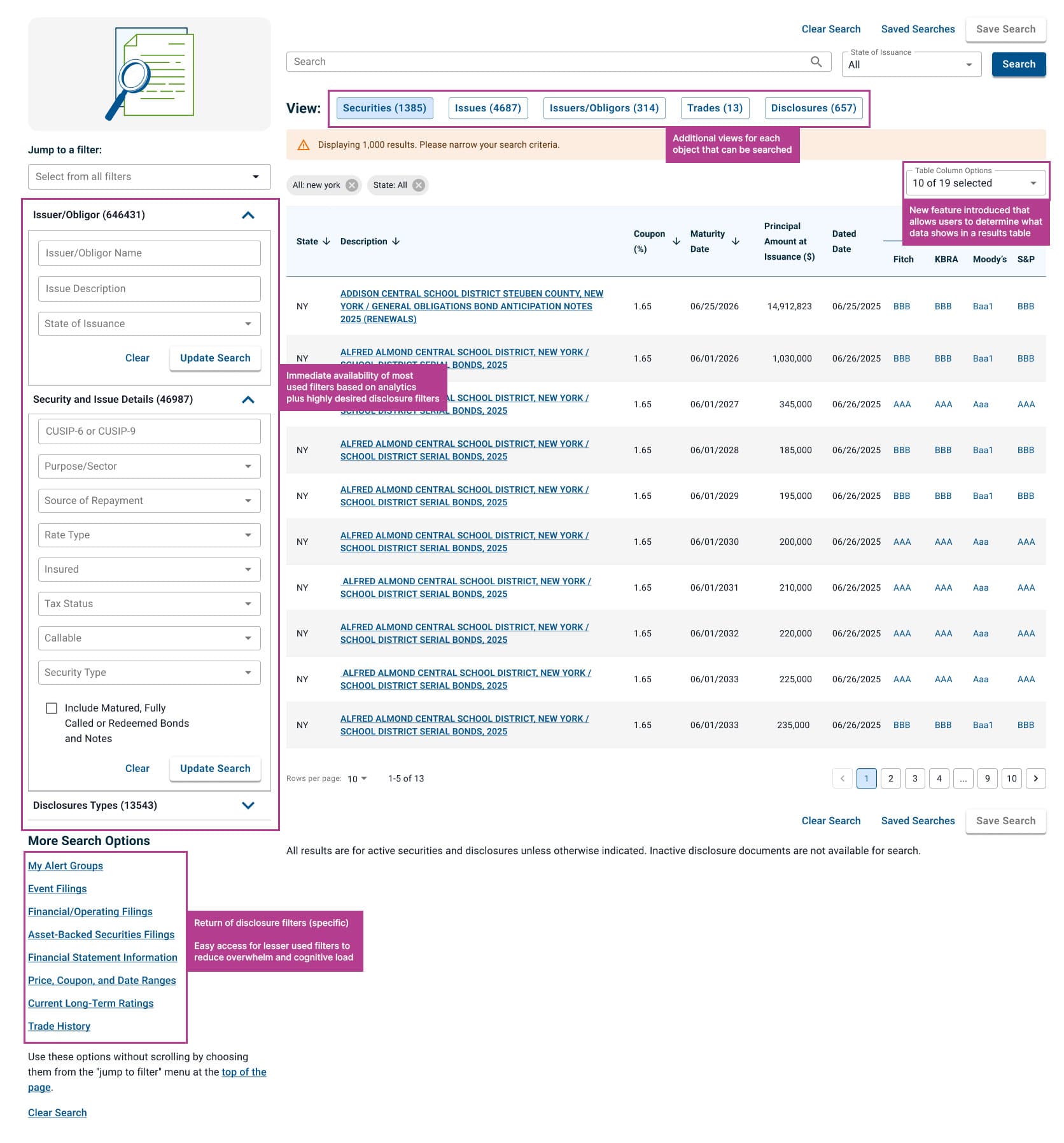
To support cross-attribute querying, I explored unifying search results around EMMA’s underlying financial objects:
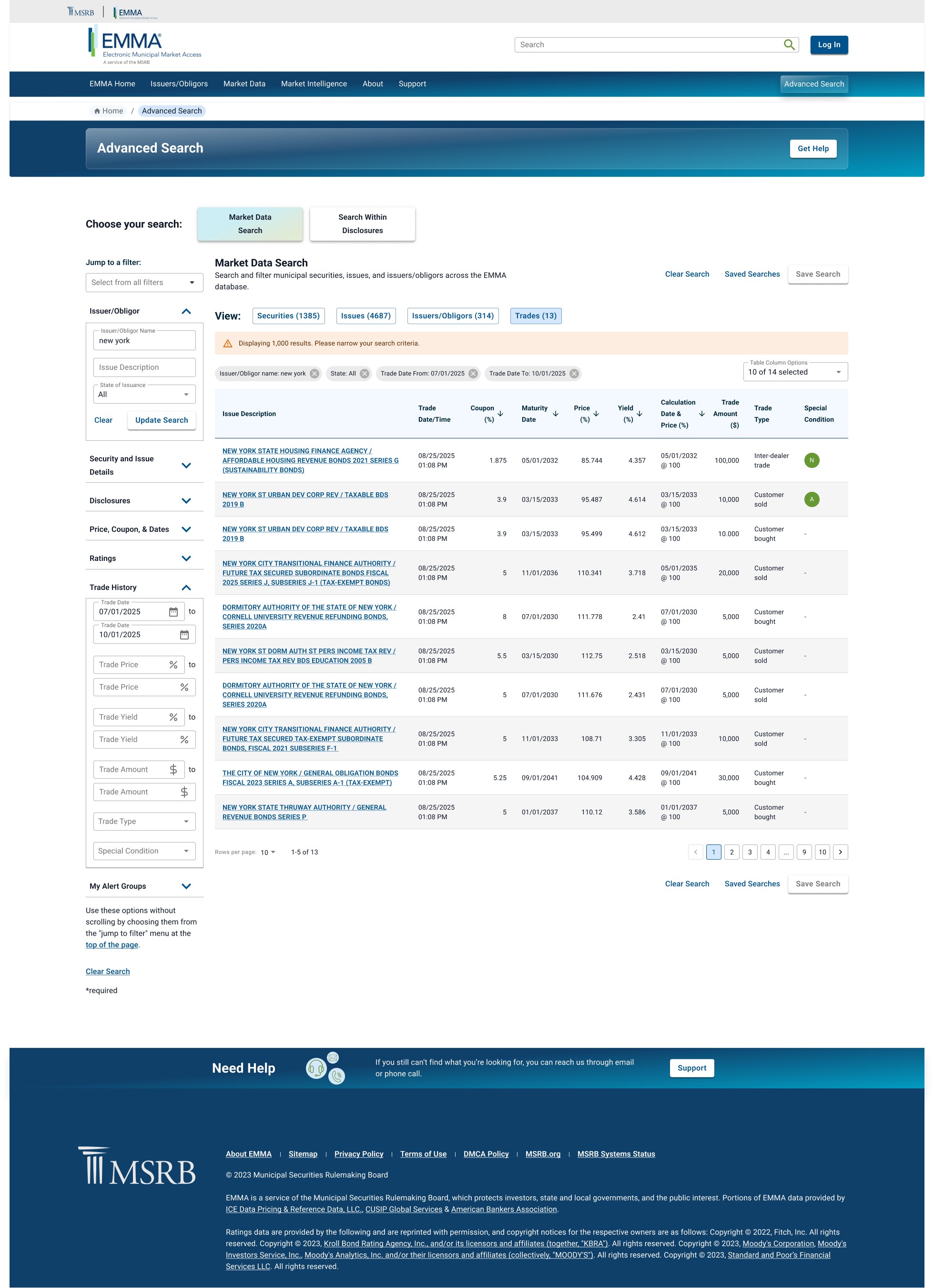
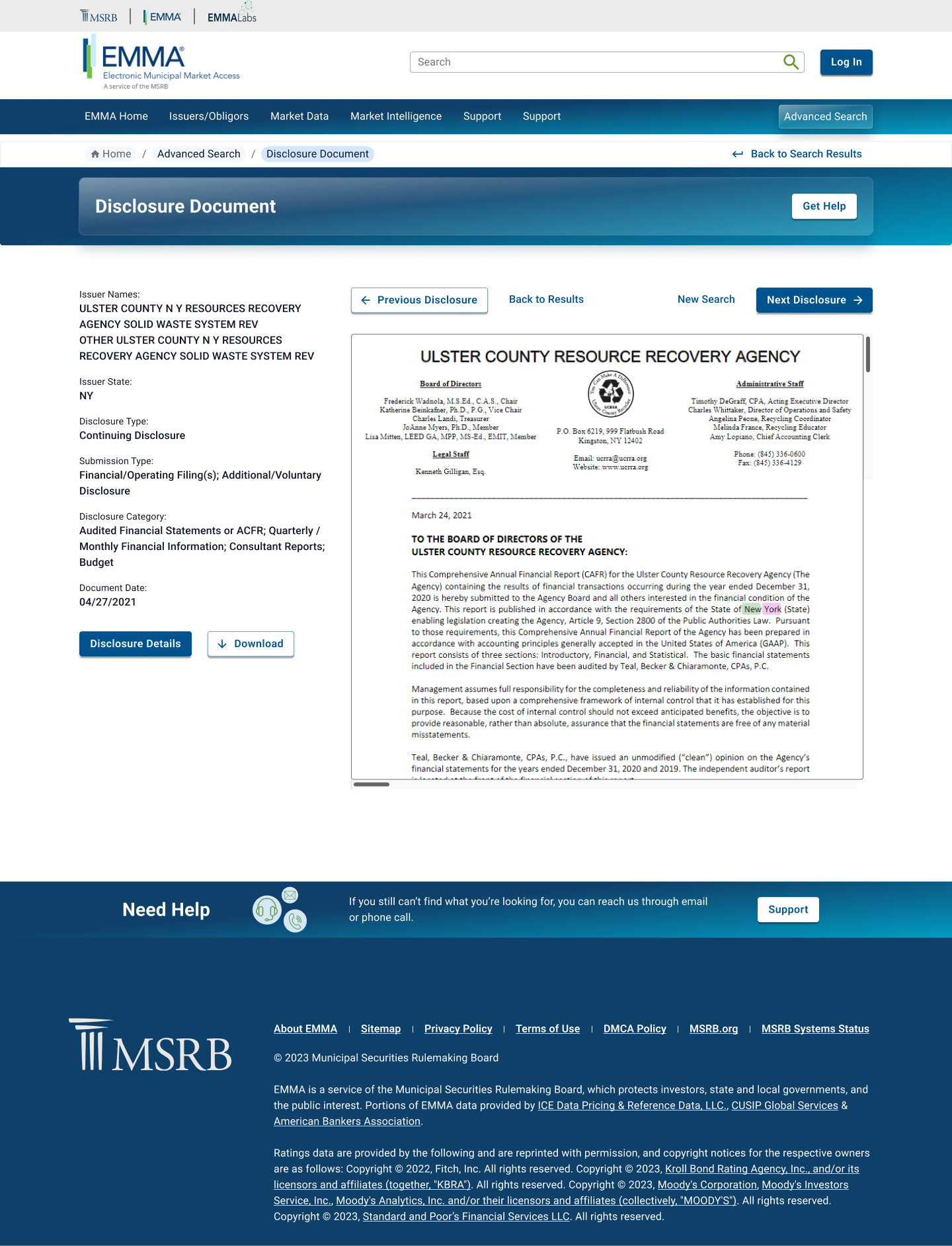
- Object-Based Results Navigation: Structured results across 5 core entities (Securities, Issues, Issuers/Obligors, Trades, Disclosures).
- Dynamic Attribute Customization: Designed a flexible table model allowing users to add, remove, and reorder result columns based on comparison needs.
The Technical Wall
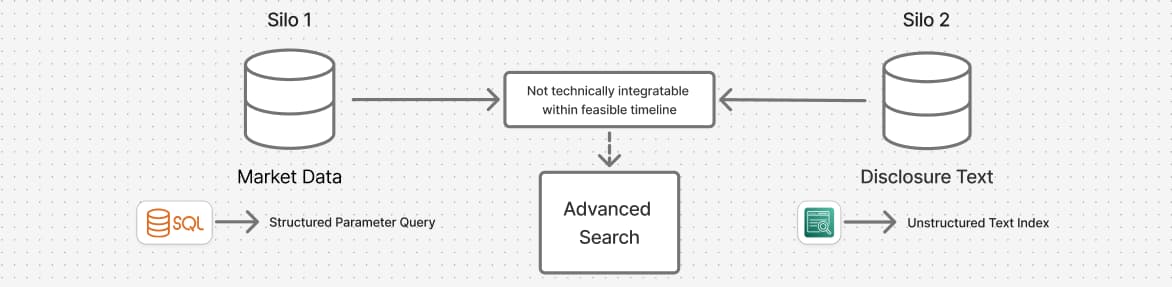
When validating feasibility with Engineering, we ran into an architectural blocker:
- Metadata Search: Dependent on SQL/Metadata queries.
- Document Text Search: Powered by Amazon Kendra indexers.
The two backends could not be programmatically merged into a single database query without an unfeasible development timeline.
Iteration 3: Unifying the Experience, Not the Backend
The technical limitation revealed an important distinction:
The user experience did not need to mirror the underlying search architecture.
Users needed a unified destination for search. They did not necessarily need the two underlying search mechanisms to become one.
The solution: Dual-Mode Search
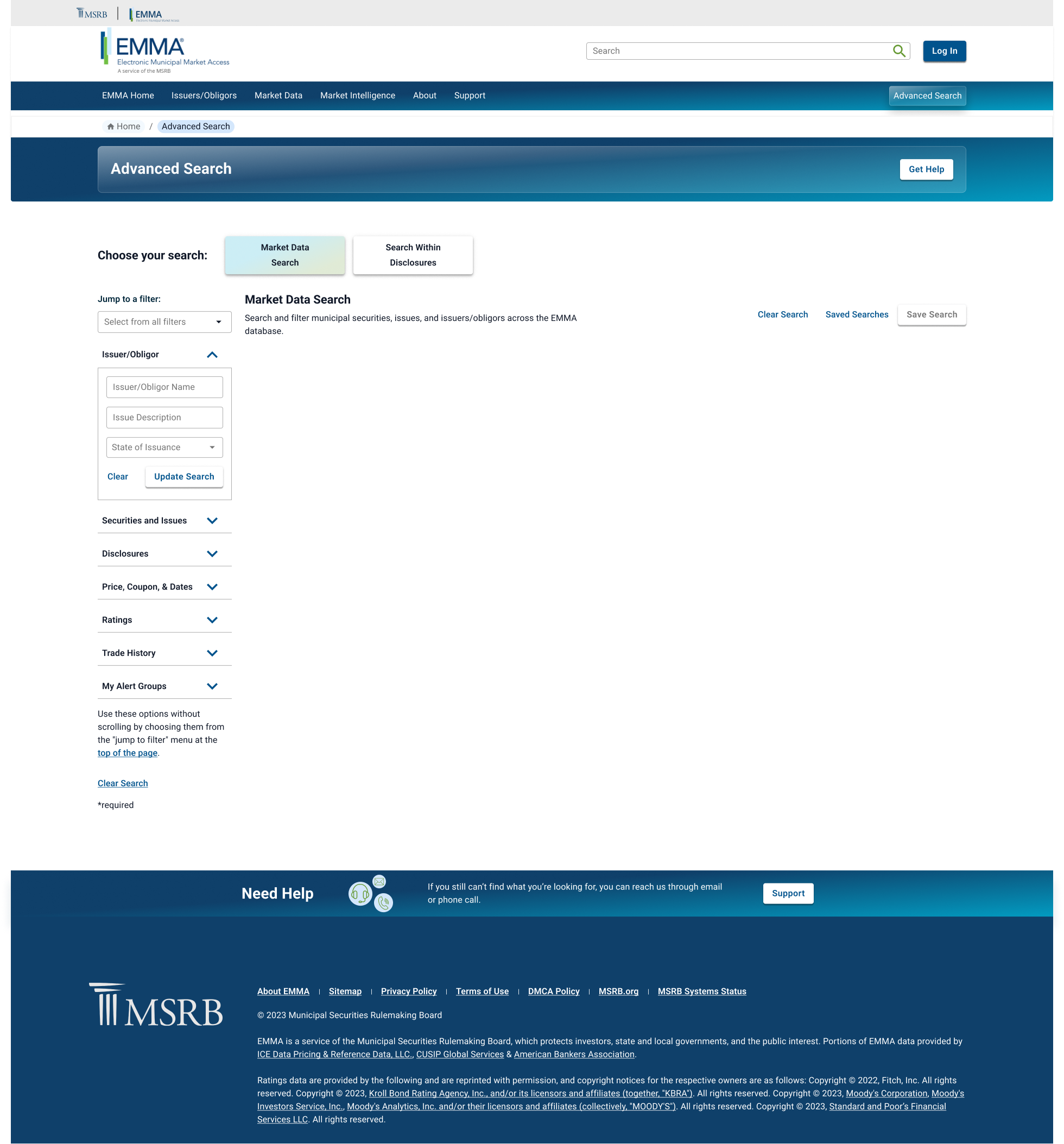
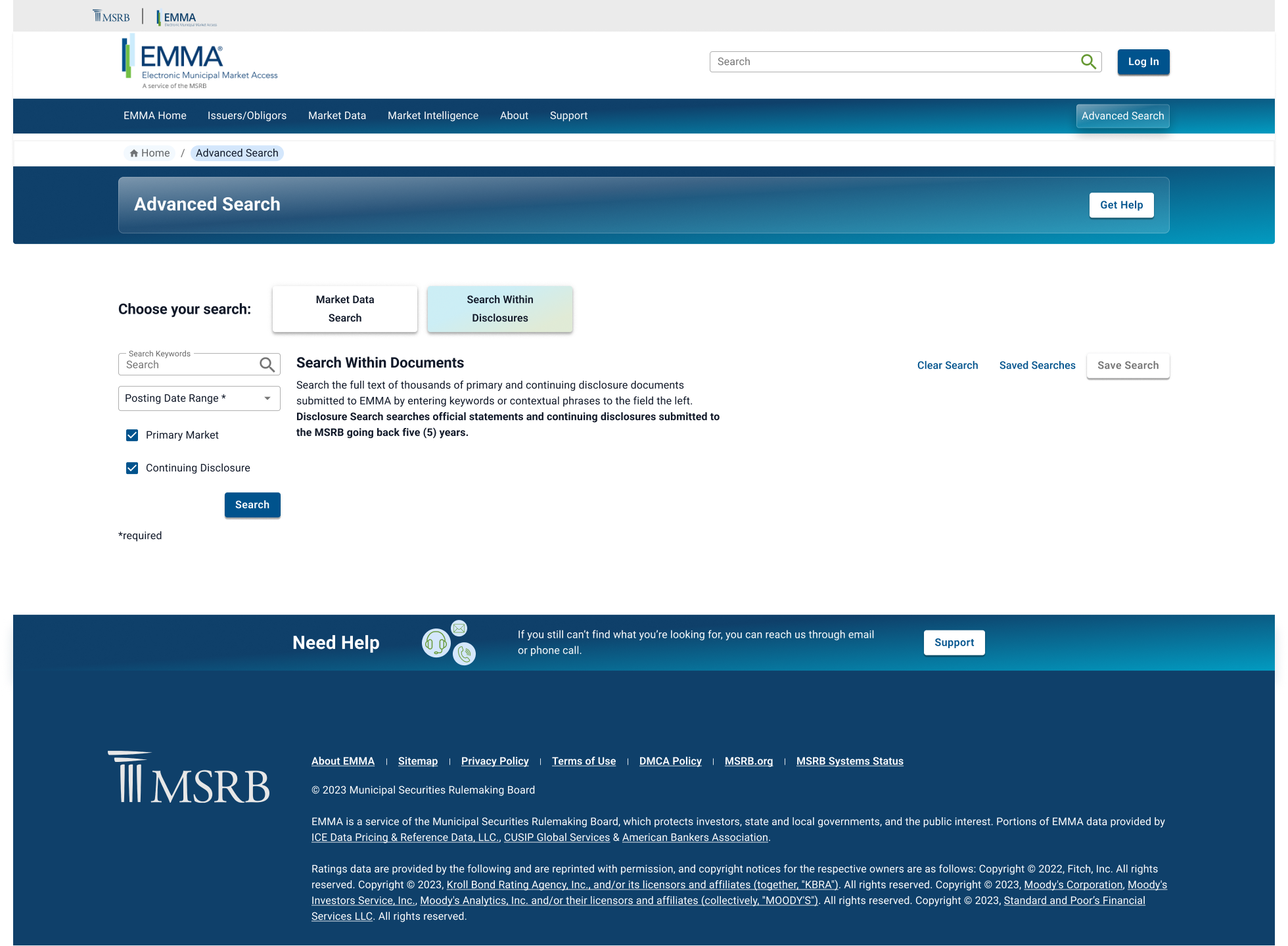
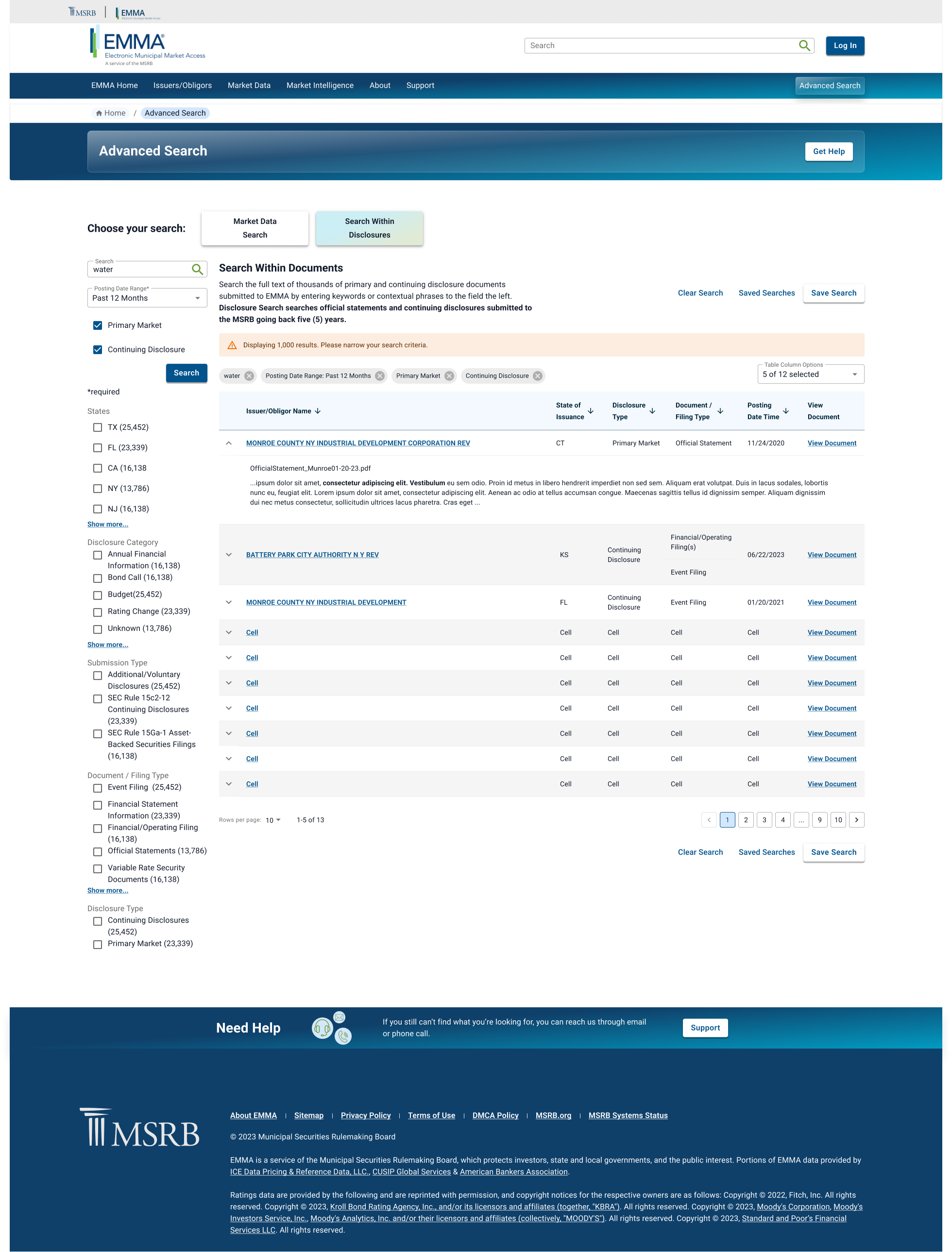
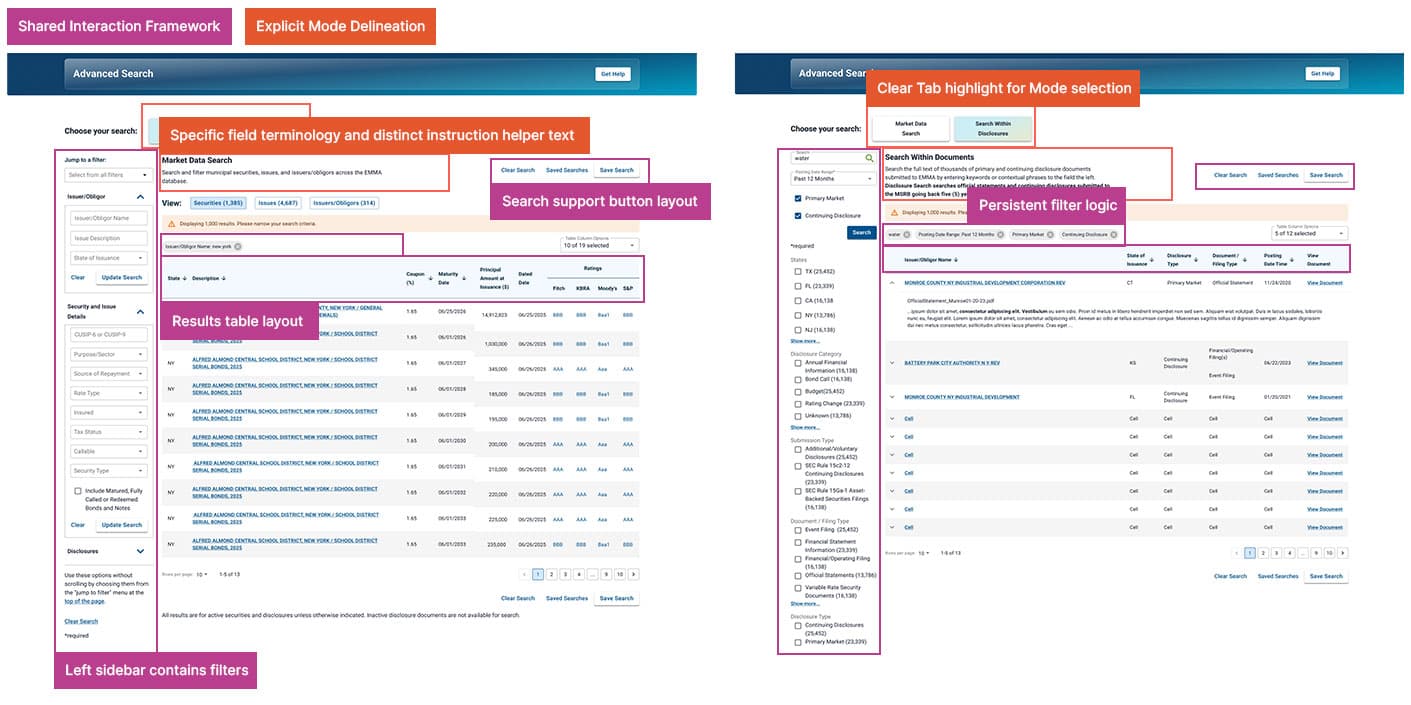
I designed a single Advanced Search destination containing two distinct search modes:
- Market Data Search (Metadata Engine)
- Search Within Disclosures (Amazon Kendra Engine)

Design Execution Highlights:
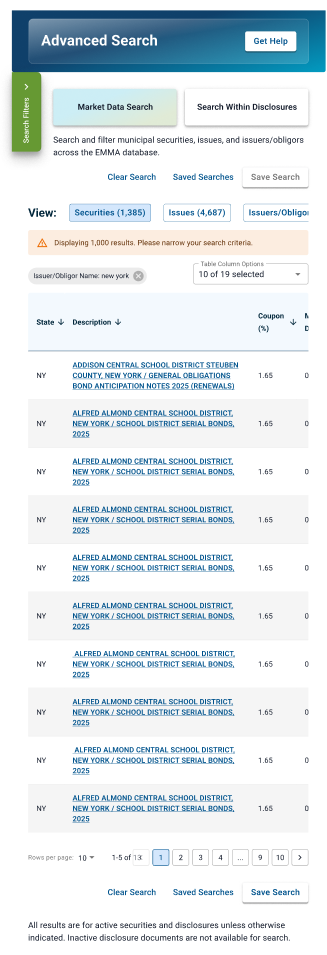
- Shared Interaction Framework: Both modes use identical left-hand layouts, component logic, and interaction patterns to reduce cognitive load.
- Explicit Mode Delineation: Distinct field terminology, visual markers, and contextual helper text clearly communicate what system is being queried and what type of output to expect.
Impact & Reflection
Key Takeaways:- Decoupled Architecture: Separated “How users experience search” from “How systems perform search,” enabling a seamless UI without massive engineering overhead.
- Reusable System Patterns: The customizable data table pattern created for V2 was adopted as a standard for future enterprise platform features.
- Business & Engineering Alignment: Reconciled user mental models with rigid legacy constraints, successfully delivering V3 into production build for the upcoming 2026 beta phase.
The most important lesson from this project was that a unified user experience does not require a unified underlying system.
The first iteration solved the problems we could see in the existing interface. Beta feedback revealed that the separation between metadata and disclosure search did not match the way users approached their work. Exploring a combined solution then exposed a technical constraint that changed what was possible.
Rather than treating those iterations as failed designs, each one provided new information about the actual problem.
The final solution emerged by separating two questions:
How should users experience search?
from
How do the underlying systems perform search?
That distinction allowed us to create a coherent search experience without requiring incompatible search mechanisms to become a single system.
It also reinforced a broader principle I apply to enterprise product design:
When the underlying system is complex, the user's experience doesn't have to be.
Next case study: Scaling UX Through Systems Thinking